
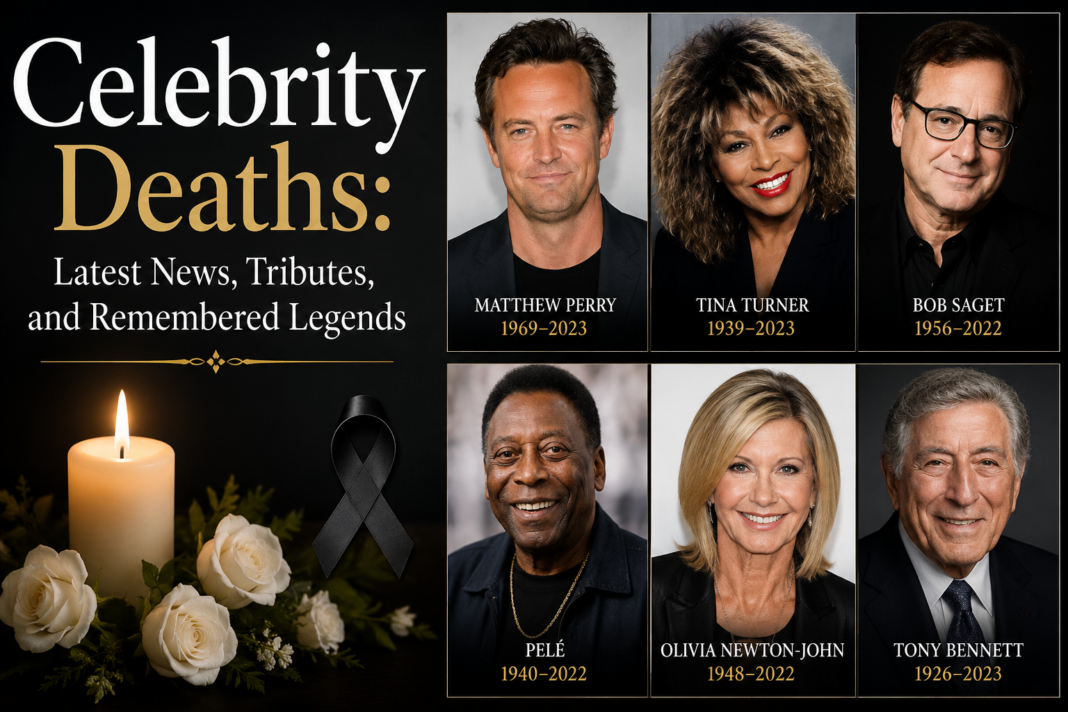

Celebrity deaths trigger widespread grief because of the deep parasocial bonds audiences form with public figures over decades. This post covers recent losses, how industries and fans pay tribute, the psychology of collective mourning, media responsibility, and the business of posthumous legacies—offering a comprehensive look at how society processes and preserves the memory of cultural icons.
Few announcements stop a news cycle quite like the death of a beloved public figure. Within minutes of the news breaking, social media floods with tributes, trending hashtags, and shared memories. Strangers grieve together in comment sections. Radio stations switch to all-day dedications. And for a brief moment, the world pauses to acknowledge that someone who shaped culture, inspired millions, and felt like a fixture of daily life is simply gone.
This collective response isn’t trivial or performative. It reflects something genuinely human—the way art, music, film, and sport create invisible but powerful bonds between creators and their audiences. A musician whose album carried someone through heartbreak. An actor whose performances defined a generation’s childhood. An athlete whose victories became communal celebrations. These figures leave marks that outlast their time on earth.
This post explores the full scope of what happens when a celebrity dies—from the initial wave of breaking news to the lasting question of legacy. Along the way, it examines how fans and industries pay tribute, why we grieve public figures so deeply, how the media shapes (and sometimes distorts) these moments, and what happens to a celebrity’s work, estate, and cultural presence long after they’re gone.
How Celebrity Deaths Affect Us—and Why They Hit So Hard
The grief that follows a celebrity death is real, even when the person grieving never met the deceased. Psychologists describe this phenomenon as a natural response to the loss of a meaningful presence in someone’s life—even if that presence existed primarily through a screen or speaker.
What makes celebrity deaths particularly significant is the scale. Millions of people experience the same loss simultaneously, which transforms private grief into a shared cultural moment. A family might mourn a loved one in relative isolation, but the death of an icon becomes a collective event—acknowledged by governments, honored by institutions, and processed publicly in ways that private deaths rarely are.
Media plays a central role in shaping how these moments unfold. Coverage begins almost instantly, often before details are confirmed. News outlets race to publish first, while social media fills the gaps—sometimes with accurate information, sometimes with rumors. The way a death is reported in those first hours can define how the public remembers it for years.
Latest Celebrity Deaths: Recent Losses and Public Reactions
Every year brings losses that feel both sudden and significant. When a celebrity dies, the immediate response typically follows a recognizable pattern: breaking news alerts, a surge of tributes on social media, retrospectives published by major outlets, and an outpouring of statements from peers and collaborators.
Recent deaths across entertainment, sports, and other public spheres have generated enormous waves of response. Fans revisit discographies, rewatch films, and share personal memories. Streaming numbers spike. Documentaries trend. Interviews resurface. The public appetite to engage with a person’s work intensifies the moment they are gone.
The immediate aftermath also tends to surface broader conversations—about health, aging, the pressures of fame, and the legacies these figures leave behind. Initial reactions are often raw and emotional, with measured reflection coming in the days and weeks that follow as the shock settles.
Tributes and Memorials: How Fans and Industries Honor Their Legends
The way society honors the deceased has changed dramatically over the past two decades. Traditional memorial services—private funerals, official ceremonies, physical vigils—now coexist with entirely new forms of public mourning that unfold online.
Fan communities organize digital tributes, creating collaborative playlists, video compilations, and artwork shared across platforms. Hashtags become archives of collective memory. Streaming platforms add dedicated sections. Venues hold moments of silence. Award shows dedicate entire segments to fallen members of their industries.
Within specific industries, tributes often reflect the culture of the craft. In music, bandmates might reunite for a one-night tribute concert. In film, a celebrity’s final project may receive a dedicated theatrical release or streaming premiere accompanied by retrospective coverage. Sports leagues retire jersey numbers, rename stadiums, and hold pre-game ceremonies that draw millions of viewers.
What’s striking about the digital age is the permanence it creates. A tribute posted in 2024 can be discovered in 2034. A fan’s heartfelt comment outlives the moment it was written. Memorialization, once confined to physical spaces like gravestones and museum exhibits, now lives across servers, databases, and social feeds—accessible to anyone, at any time.
Remembered Legends: Revisiting the Legacies of Iconic Figures
Some celebrity deaths recede from the headlines within weeks. Others never really leave. The truly iconic figures—those whose work fundamentally shifted their field—continue to be rediscovered and recontextualized by new generations long after their death.
Consider the ongoing cultural presence of figures like David Bowie, whose influence on music, gender expression, and visual art has only grown since his death in 2016. Or Kobe Bryant, whose approach to excellence—widely known as the “Mamba Mentality”—is regularly invoked in sports, business, and motivational contexts years after his passing in 2020. These figures don’t simply leave behind a body of work. They leave behind frameworks, philosophies, and aesthetics that continue to shape how people think and create.
Posthumous recognition is common. Artists who were underappreciated during their lifetimes often receive critical reassessment after their deaths, as audiences return to their work with fresh eyes. Legacy, it turns out, is not fixed at the moment of death—it continues to evolve as culture shifts around it.
The Psychology of Grieving for Celebrities: Why Do We Mourn People We Never Met?
The concept of par asocial relationships—one-sided emotional bonds formed between an audience and a public figure—was first described by sociologists Donald Horton and Richard Wohl in 1956. Decades of research since have confirmed what most people intuitively understand: the bonds we form with celebrities are emotionally real, even without any direct personal connection.
When someone has listened to an artist’s music through every major life transition, or grown up watching an actor across a film series, the relationship feels personal—because in a meaningful sense, it is. The celebrity’s work has been present during formative moments, providing comfort, inspiration, or a sense of shared experience.
This is why grief over a celebrity’s death can feel disproportionate to outsiders but completely appropriate to those experiencing it. The loss is real. What’s being mourned isn’t just a person, but a source of meaning, familiarity, and identity.
Collective grief—the shared experience of mourning at scale—also serves an important social function. It creates connection, common ground, and opportunities for communities to process difficult emotions together. Public mourning is rarely just about the individual who died; it’s also about the living, and what that person meant to them.
The Media’s Role in Shaping Narratives Around Celebrity Deaths
Media coverage of celebrity deaths operates under significant pressure. Speed is prioritized. Emotional impact drives clicks. And the line between responsible journalism and exploitation can blur quickly.
Responsible reporting focuses on accurate information, contextualized tributes, and coverage that honors both the deceased and the public’s genuine need to understand what happened. Sensationalist coverage, by contrast, dwells on speculation, conflict, or the more dramatic elements of a person’s story—often at the expense of accuracy and dignity.
Misinformation spreads fastest immediately after a celebrity death, when facts are scarce and demand for information is high. False reports about cause of death, feuds, and financial matters have caused real harm to families and estates. This is why media literacy—knowing how to identify and rely on credible sources—matters enormously during these moments.
Trusted outlets that take time to verify before publishing provide a genuine public service. Readers who share information responsibly help contain the spread of false narratives. The collective handling of a celebrity’s death reflects broader values about how society treats both public figures and truth.
The Business of Celebrity Endings: Posthumous Releases and Estate Management
The death of a major celebrity sets in motion a complex series of legal, financial, and creative decisions. Estates become significant enterprises. Unreleased recordings, manuscripts, films, and other creative works enter a new phase of management that can generate revenue and controversy in equal measure.
Posthumous releases are common—and complicated. When done thoughtfully, they can offer fans genuine insight into an artist’s creative process and provide a meaningful final chapter. When handled poorly, they can feel exploitative, prioritizing profit over artistic integrity.
Estate management increasingly involves decisions about digital likeness, AI reproduction, and brand partnerships—areas with minimal legal precedent and enormous commercial stakes. The estates of figures like Elvis Presley and Michael Jackson generate hundreds of millions of dollars annually, decades after their deaths. How these estates are managed directly shapes how the public continues to perceive and engage with these figures.
Legacy preservation is both an art and a business. Museums, foundations, and official archives dedicated to a celebrity’s life and work serve a cultural purpose—but they are also commercial operations. Understanding both dimensions helps fans and observers engage more critically with the posthumous narratives being constructed around the figures they admire.
The Enduring Legacy of Stars: Keeping Their Memory Alive
Celebrity deaths are singular events. But the process of remembrance that follows is continuous, evolving, and deeply human. Each anniversary brings fresh coverage. Each new generation encounters the work anew. Each cultural shift reveals something previously overlooked.
What makes a legacy endure isn’t simply talent or fame during a person’s lifetime—it’s the resonance of their work with ongoing human experience. The celebrities who remain relevant decades after their deaths are typically those whose art addressed something timeless: love, loss, identity, resilience, joy.
The way society honors these figures says as much about collective values as it does about the individuals being remembered. Choosing to engage thoughtfully with a celebrity’s work and life—rather than reducing them to a headline or a trending topic—is itself a form of tribute.
Ultimately, remembrance is an act of care. Toward the deceased, toward the art they made, and toward the communities that grew up with them. Stars die. Their light, refracted through the work they left behind, doesn’t.
Frequently Asked Questions About Celebrity Deaths and Legacy
Why do celebrity deaths affect people who never met them?
Celebrity deaths affect people because of par asocial relationships—emotional bonds formed through years of engagement with a public figure’s work. According to researchers Horton and Wohl, these one-sided relationships feel emotionally real because they’re tied to personal memories, formative experiences, and a sense of shared identity. The grief is genuine, even without direct personal connection.
How do media outlets handle celebrity death coverage responsibly?
Responsible coverage prioritizes verified facts, contextual reporting, and dignified tributes rather than speculation or sensationalism. Reliable outlets wait for confirmed information before publishing cause-of-death details and avoid amplifying unverified rumors. Readers can protect themselves by cross-referencing multiple credible sources before sharing breaking news.
What happens to a celebrity’s estate after they die?
A celebrity’s estate is managed by designated executors or a trust, who oversee assets including intellectual property, unreleased creative works, real estate, and brand partnerships. Major estates—such as those of Michael Jackson and Elvis Presley—generate substantial ongoing revenue through licensing, streaming royalties, merchandise, and museum partnerships.
Are posthumous celebrity releases ethical?
Posthumous releases are ethical when they reflect the artist’s documented intentions or are managed with input from close collaborators. They become more controversial when estates prioritize commercial gain over artistic integrity, releasing material the artist had deliberately withheld. Fans and critics often debate whether a release honors or exploits the artist’s legacy.
How has social media changed the way we mourn celebrities?
Social media has transformed celebrity mourning into a real-time, participatory event. Tributes, memories, and reactions are shared globally within minutes of a death being announced. This creates a documented archive of collective grief that persists long after the moment passes—and also accelerates the spread of misinformation when unverified reports circulate faster than facts.
What makes a celebrity’s legacy last beyond their death?
Longevity of legacy tends to come from work that addresses universal human themes—love, identity, struggle, transformation—rather than work tied to a specific cultural moment. Artists and public figures who challenged conventions, influenced other creators, or provided a meaningful framework for understanding the world tend to be rediscovered and recontextualized by new generations over time.