
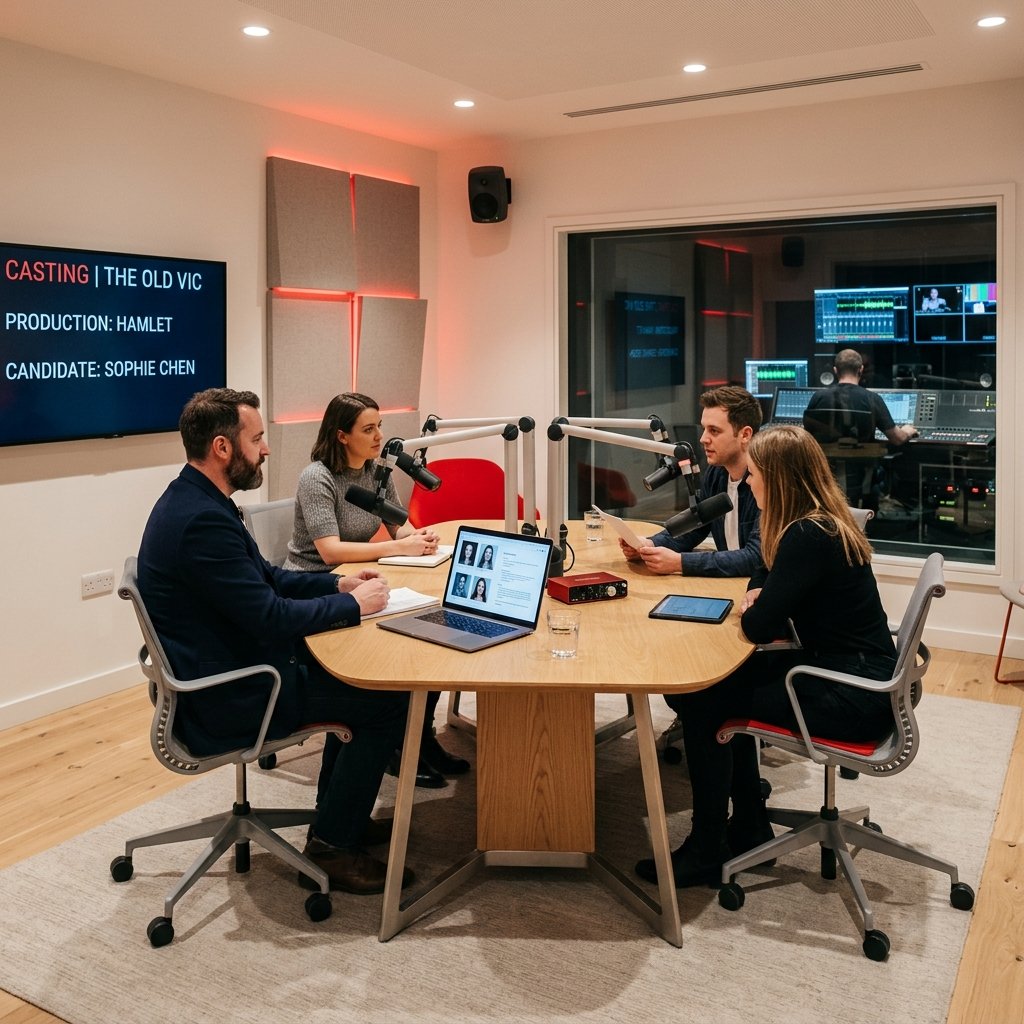

A back casting room is a secondary audition space used in film, theater, and television production to conduct preliminary or overflow auditions away from the main casting suite. Back casting rooms streamline the casting process by allowing multiple auditions to run simultaneously, improving efficiency and reducing wait times for actors and casting directors alike.
Every great performance starts long before the cameras roll or the curtain rises. It starts in a room—often a modest one—where actors step in, take a breath, and show what they’ve got. That room is the back casting room, and understanding how it works can make a real difference whether you’re a casting director, a production manager, or an actor navigating the audition circuit.
Back casting rooms don’t always get the spotlight that main casting suites do, but they’re a critical part of how productions manage large-scale auditions efficiently. From Broadway productions to Hollywood blockbusters to independent theater companies, back casting rooms serve as the operational backbone of the casting process.
This guide covers everything you need to know: what a back casting room is, how it’s designed, what equipment it needs, how auditions are conducted within it, and what industry professionals say about making them work well. Whether you’re setting one up for the first time or looking to optimize an existing space, this is your complete reference.
What Is a Back Casting Room?
The definition and historical context of back casting rooms
A back casting room is a secondary audition space that operates in conjunction with a main casting suite. Historically, casting was a centralized process—one room, one casting director, one actor at a time. As productions grew in scale and the volume of talent to be seen increased, this single-room model became a bottleneck.
The back casting room emerged as a practical solution. Productions needed somewhere to warm up actors, conduct preliminary reads, or run simultaneous auditions for supporting roles while the lead casting process continued in the main room. Over decades, this evolved from a simple waiting area with basic amenities into a fully equipped audition space with its own technical capabilities.
How back casting rooms differ from main casting rooms
The distinction isn’t purely about size. Main casting rooms are typically where final decisions are made, often with producers, directors, and senior casting staff present. Back casting rooms, on the other hand, are primarily used for:
- Preliminary auditions — the first round of reads before candidates are advanced to the main room
- Supporting or background role casting — high-volume auditions that don’t require the full creative team
- Overflow management — handling excess audition traffic when the main room is at capacity
- Self-tape review sessions — a quiet space for casting assistants to review recorded submissions
The back casting room functions as a support system for the main casting process, not a lesser version of it.
Why the back casting room matters in modern production
Casting is one of the most time-sensitive phases of any production. Delays here ripple across the entire production schedule. A well-organized back casting room helps productions see more actors in less time, maintain consistent audition conditions, and document results accurately—all of which lead to better casting decisions.
Key Features of Back Casting Rooms
What layout and design specifications work best?
Effective back casting rooms balance functionality with comfort. The recommended minimum space is around 200–300 square feet, though this varies depending on production scale. Key design considerations include:
- Clear sightlines — casting staff need an unobstructed view of the performance area
- Neutral backdrop — typically a flat white, gray, or green wall or portable backdrop for on-camera auditions
- Adequate lighting — even, diffused lighting that flatters performers without creating harsh shadows
- Minimal distractions — soundproofing or acoustic panels to reduce noise bleed from adjacent rooms or hallways
The layout should allow actors to enter, perform, and exit without crossing paths with incoming talent, minimizing awkward interactions and keeping energy focused.
What technical equipment is typically found in back casting rooms?
Modern back casting rooms are equipped with more than a chair and a camera. Standard equipment includes:
- HD camera or webcam — for recording auditions, especially useful for absent producers reviewing footage later
- Ring light or softbox lighting — consistent, flattering illumination for recordings
- Microphone or audio recording setup — essential for musical theater or spoken dialogue work
- Laptop or tablet — for accessing scripts, scheduling software, and submission databases
- Monitor or TV screen — so actors can review a self-tape immediately if needed
- Teleprompter (optional) — for cold reading scenarios
The level of technical sophistication scales with the production’s budget and requirements, but even a basic setup should include reliable recording and playback capabilities.
Accessibility and comfort considerations for actors and casting directors
An often overlooked element of back casting room design is accessibility. A space that makes actors feel welcomed and at ease tends to generate better auditions. This means:
- Accessible entry points for actors with mobility considerations
- Seating for casting assistants and waiting actors that doesn’t feel cramped
- Water, tissues, and basic amenities available without asking
- Clear signage directing talent to the correct room
- Climate control—temperature extremes are distracting and uncomfortable for everyone
Casting directors spend long hours in these rooms. Ergonomic seating and good air circulation matter as much for staff as they do for talent.
The Back Casting Room Process
How should pre-audition preparation and scheduling be handled?
Organization before the first actor walks in determines how smoothly the day runs. Best practice involves:
- Confirmed schedules sent 24–48 hours in advance, with clear location details and parking or entry instructions
- Sides or scripts distributed ahead of time via email or a casting platform, giving actors adequate preparation time
- Room setup completed before the first slot, including camera angles tested, lighting checked, and recording software opened and ready
- Roles briefed to assistants so everyone in the room understands what the production is looking for
Scheduling software like Casting Networks or Breakdown Services helps manage time slots, send reminders, and track who has confirmed.
How are auditions conducted in back casting rooms?
The audition itself typically follows a structured format:
- Slate introduction — the actor states their name, agent (if applicable), and the role they’re reading for on camera
- Performance — the prepared sides, monologue, or cold read
- Redirect — the casting director may offer an adjustment to test range and responsiveness
- Wrap — a courteous close, with next steps communicated clearly
Back casting room auditions are often faster-paced than main room sessions, particularly for supporting roles. Efficiency is key, but it shouldn’t come at the cost of making actors feel rushed or dismissed.
Feedback mechanisms and follow-up procedures
After auditions, casting assistants typically log notes against each actor’s profile in a talent management system. Notes might include performance quality, physical fit for the role, chemistry considerations, and any technical issues with the recording. Callbacks are communicated via agents or directly through casting platforms, and recordings are shared internally with the broader creative team for review.
Best Practices for Back Casting Rooms
How do you create an inclusive and professional casting environment?
Inclusion in the casting room starts with intentional design and conduct. Casting directors and production teams are increasingly aware that the audition environment itself can either support or inhibit a performer’s ability to show their best work. Practical steps include:
- Using gender-neutral language in all communications and in-room interactions
- Ensuring sides and scripts are available in accessible formats (large print, digital)
- Avoiding comments on physical appearance beyond what’s directly relevant to the role
- Training casting assistants on professional conduct standards
The Screen Actors Guild-American Federation of Television and Radio Artists (SAG-AFTRA) provides guidelines on fair and ethical audition practices that are widely referenced across professional productions.
Time management and documentation standards
High-volume audition days require discipline. Effective back casting room operations typically adhere to:
- Strict time slots — 10 to 15 minutes per actor for supporting roles, longer for principal roles
- Buffer time — 5-minute gaps between slots to log notes and reset the room
- Consistent evaluation criteria — using a standardized scoring rubric to ensure fair comparison across candidates
- Cloud-based documentation — storing notes and recordings in a shared system accessible to the full casting team
Common Challenges and How to Solve Them
How do you manage space constraints in small back casting rooms?
Not every production has access to a large facility. When space is limited, portable equipment becomes invaluable. Collapsible backdrops, clip-on ring lights, and compact tripods allow a reasonably small room to function as a professional audition space. Removing unnecessary furniture and keeping only essential equipment in the room during auditions maximizes the usable area.
How do you handle high-volume audition schedules efficiently?
On busy casting days, it helps to assign dedicated roles: one person managing the door and actor flow, one operating the camera, and one taking notes. This prevents the casting director from being pulled in multiple directions and keeps energy focused on evaluating performances. If volume is extremely high, consider staggered call times and a waiting area separate from the audition room to manage flow.
What are the contingency plans for technical difficulties?
Technical problems during auditions are not uncommon. Best practice is to have backup recording options (a secondary device or phone) always available. Casting directors should also maintain written notes in parallel with digital records, so a recording failure doesn’t mean data loss. A pre-audition tech check—completed before the first actor arrives—catches most issues before they become disruptions.
Back Casting Rooms vs. Other Casting Spaces
Main casting room vs. back casting room: what’s the difference?
The main casting room is where final-round auditions happen, typically with more senior creative staff present. It’s better equipped, larger, and designed for focused, deliberate evaluation. The back casting room prioritizes throughput and preliminary screening. Neither is superior—they serve different stages of the same process.
When should you use alternative casting venues?
Productions without access to a dedicated casting facility sometimes use:
- Rented studio spaces — flexible and fully equipped, but more expensive
- Theater rehearsal rooms — cost-effective for theater productions already using the space
- Remote/self-tape auditions — increasingly common since 2020, allowing actors to submit recorded auditions from home
Self-tape submissions have grown significantly in use, particularly for first-round auditions. However, they introduce variability in recording quality and cannot fully replicate the dynamic of a live audition. Back casting rooms remain the preferred option when in-person reads are required.
Industry Insights: What Casting Directors Say
Casting professionals consistently point to two priorities when discussing back casting room effectiveness: consistency and communication. The room’s physical setup should be identical across audition days so that performances can be fairly compared. And actors should always leave knowing what the next step is, even if the answer is simply “we’ll be in touch.”
Emerging trends in casting room design reflect a broader shift toward hybrid workflows. Many productions now equip back casting rooms with high-quality streaming setups, allowing remote producers or directors to observe live auditions in real time. This reduces the need for callbacks while keeping key decision-makers in the loop earlier in the process.
Digital casting platforms—Casting Networks, Actors Access, and Spotlight among the most widely used—have also transformed how back casting rooms operate administratively. Scheduling, submission review, and note-taking increasingly happen within a single platform rather than across disconnected tools.
Building an Effective Back Casting Room: Final Recommendations
A well-designed back casting room doesn’t just make the casting director’s job easier—it creates the conditions for actors to do their best work, which ultimately serves the production. The essential elements are clear: functional design, reliable technical equipment, organized scheduling, consistent documentation, and a professional, inclusive environment.
For production companies building a back casting room from scratch, start with the fundamentals—camera, lighting, backdrop, and a reliable recording setup—and layer in additional capabilities as budget allows. For those optimizing an existing space, focus on the process as much as the physical environment. The room’s layout matters, but so does the workflow that happens inside it.
The casting room is where productions find the people who will bring their stories to life. Getting that space right is worth the effort.
Frequently Asked Questions
What is the purpose of a back casting room?
A back casting room is used to conduct preliminary auditions, overflow auditions, or high-volume casting sessions for supporting roles. Back casting rooms allow productions to run multiple audition streams simultaneously, reducing scheduling bottlenecks and improving overall efficiency.
How is a back casting room different from a main casting room?
Main casting rooms are typically used for final-round auditions with senior creative staff present, while back casting rooms handle earlier-stage or higher-volume auditions. Back casting rooms prioritize throughput; main rooms prioritize deliberate, focused evaluation with key decision-makers.
What equipment does a back casting room need?
At minimum, a back casting room needs an HD camera, consistent lighting (such as a ring light or softbot), audio recording capability, and a device for accessing scheduling software and scripts. More advanced setups may include a streaming solution for remote observers, a teleprompter, or a dedicated playback monitor.
How much space does a back casting room require?
A functional back casting room can operate in as little as 200 square feet, though 250–350 square feet is more comfortable for both performers and casting staff. The key is a clear performance area, adequate sightlines, and enough room for camera and lighting equipment without crowding.
Are back casting rooms still relevant with the rise of self-tape auditions?
Yes. While self-tape auditions have become more common for initial screening, back casting rooms remain essential for in-person reads, chemistry tests, and any audition format that benefits from real-time interaction between the actor and casting director. Many productions use self-tapes as a first filter, then bring shortlisted candidates in for a live back casting room session.
What software is commonly used to manage back casting room auditions?
Casting Networks, Actors Access, Breakdown Services, and Spotlight are among the most widely used platforms for scheduling, submission management, and note-taking in professional casting environments.