
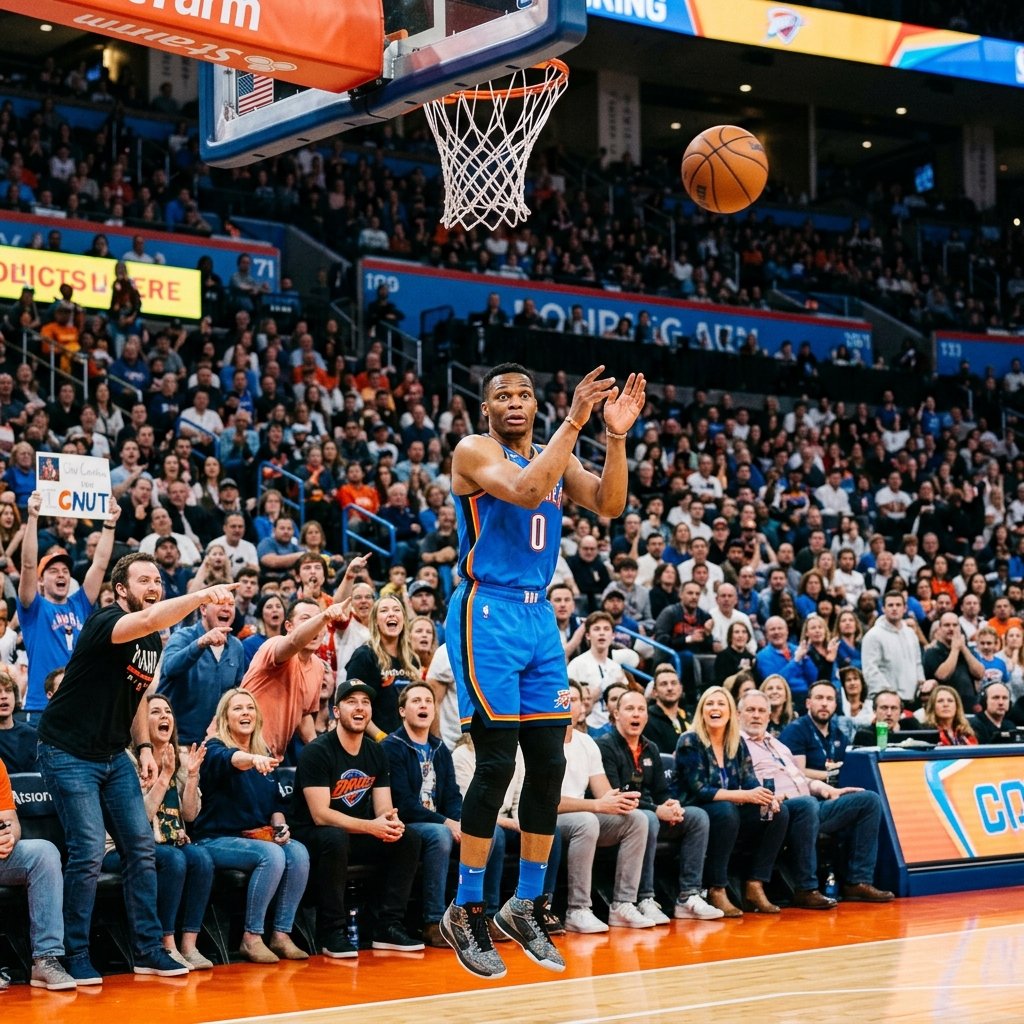

The Airball meme originates from basketball, where a shot misses the basket and backboard entirely. Online, it became a viral shorthand for spectacular failure or a badly misjudged attempt. Rooted in crowd chants at live games, the meme spread across TikTok, Twitter/X, and Reddit as a reaction format, cultural metaphor, and comedic tool.
Few internet memes capture failure quite so cleanly. The airball—a basketball shot that misses everything, not even grazing the rim—has transcended the sport that birthed it to become one of the internet’s most versatile reaction formats. It’s punchy, visual, and universally understood. You don’t need to know basketball to feel the sting of an airball.
This post breaks down everything you need to know about the Airball meme: where it came from, why it spread, how creators have adapted it, and what its staying power says about how we process failure online. Whether you’re a basketball fan who lived the original moment or someone who first encountered it in a comment section, the story behind this meme is worth exploring.
What Does “Airball” Mean as a Meme?
In basketball, an airball is a shot that misses the rim, net, and backboard entirely. It’s arguably the most embarrassing outcome of a shot attempt—not just a missed basket, but a total miscalculation. Crowds at live games have long chanted “Air-ball! Air-ball!” to mock the shooter, turning individual failure into a public spectacle.
As a meme, “Airball” carries that same energy. Online, it functions as a reaction to anything that catastrophically misses the mark: a bad take, a failed business decision, a celebrity misstep, or a poorly timed joke. The word alone communicates that something didn’t just fail—it failed with maximum exposure and minimum grace.
Where Did the Airball Meme Come From?
The sports origin of the airball chant
The cultural roots of “Airball” as mockery go back decades. The crowd chant became a fixture in college basketball arenas across the United States throughout the 1980s and 1990s. It’s a rare instance where audience participation became ritualized—fans didn’t just react to the miss, they synchronized their response into a chorus.
High-profile moments amplified this. Games broadcast nationally meant that an airball, once chanted at, could be seen and heard by millions. The humiliation was built into the format.
How the meme took shape online
As sports culture migrated to social media, so did the airball. Highlight compilations on YouTube brought the most egregious misses to new audiences. GIFs and short video clips extracted individual moments from their game context and replanted them in comment threads, forums, and social feeds.
The transition from sports reference to general-purpose meme happened gradually. Reddit communities like r/nba and r/sports were early adopters, using “airball” as both literal commentary and figurative punchline. From there, the concept bled into broader internet culture—no basketball knowledge required.
Why Does the Airball Meme Resonate So Strongly?
The psychology of public failure
Failure is a universal experience, but public failure carries a different weight. The airball meme taps into a specific kind of cringe—the moment when an attempt is so misaligned with reality that even bystanders feel it. Psychologists sometimes refer to this as “vicarious embarrassment,” and it’s a powerful emotional trigger.
Memes that capture this emotion tend to travel fast. They give people a shorthand for something complex: the gap between confidence and execution, between intention and outcome.
Simplicity and scalability
One reason the Airball meme has proven so durable is its simplicity. The concept requires no explanation. Unlike memes that depend on niche references or layered irony, “airball” lands immediately. That accessibility makes it scalable—applicable across politics, pop culture, sports, tech, and everyday life.
How Has the Airball Meme Evolved Visually Across Platforms?
GIFs, clips, and reaction content
The most common visual format for the Airball meme is a short clip of an actual basketball airball, often paired with the crowd chant as audio. These clips are deployed as replies or quote-tweets when someone posts a take that the community deems wildly off-base.
On TikTok, creators began overlaying airball footage with commentary, building stitched responses where the meme format itself became the punchline. The audio—specifically the crowd chanting—became a recognizable sound cue, triggering the same emotional response even before the visual context loaded.
Text-based adaptations
On platforms like Twitter/X and Reddit, the meme adapted into text form. Responses like “That’s an airball,” “Sir, this is an airball,” or simply posting the word as a standalone reply became shorthand for dismissal. The sporting metaphor dissolved further, leaving only the meaning: you missed entirely.
“Airball” in Pop Culture: Media, Music, and Wider Discourse
The airball metaphor has made appearances beyond comment sections. Sports commentators adopted it as broadcast vernacular for any failed strategy or prediction. Political pundits began applying it to policy failures and campaign missteps.
In music, hip-hop artists have referenced airballs in lyrics as metaphors for failed attempts, missed opportunities, and falling short of expectations—a natural extension of basketball culture’s longstanding influence on the genre.
Late-night television and comedy writers have used the concept to lampoon public figures whose grand statements didn’t match reality. The meme’s malleability makes it a reliable comedic structure: build up the attempt, reveal the airball.
How Did the Airball Meme Spread So Quickly on Social Media?
The role of reply culture
The virality of the Airball meme is closely tied to how reply and quote-post culture works on platforms like Twitter/X. When a post receives a high-profile airball response—a clip, a GIF, or a text-based call-out—that reply can accumulate more engagement than the original post. This dynamic rewards the meme, algorithmically surfacing it to wider audiences.
Hashtags and trending moments
Specific sporting events have reignited the meme repeatedly. NBA playoff moments, in particular, generate spikes in airball content. When a high-stakes shot becomes an airball on national television, the online reaction follows within minutes. Platforms like Twitter/X register these spikes as trending topics, introducing the meme to users who weren’t watching the game.
User-Generated Content and the Airball Challenge
Creative adaptations by creators
TikTok creators have extended the Airball meme into challenge formats, where users film themselves “attempting” something—a basketball shot, a cooking task, a dance move—and deliberately miss, syncing the airball chant to the moment of failure. The self-deprecating humor resonated strongly with younger audiences who grew up with failure-positive content culture.
Reaction compilations on YouTube aggregate the funniest airball moments—sporting, political, and cultural—building content around the meme itself rather than any single event.
Beyond the Meme: “Airball” as a Metaphor for Failure
The most interesting evolution of the Airball meme is its abstraction into pure metaphor. Removed entirely from basketball, an “airball” now describes any attempt that misses so completely that it calls the attempt itself into question.
This framing has real utility in everyday language. Business journalists use it to describe product launches that failed to find an audience. Tech commentators apply it to overhyped announcements that underdelivered. The word conveys a specific quality of failure—not bad luck, but a fundamental miscalculation of what was needed.
This metaphorical weight is what separates the Airball meme from ephemeral viral content. Memes rooted in genuine, reusable concepts tend to outlast those built on fleeting references.
Criticisms and Controversies Around the Airball Meme
No meme exists without friction. The Airball meme has drawn criticism in several contexts:
Pile-on culture: When directed at individuals—particularly public figures or athletes—the meme can amplify mass ridicule. Sports fans have raised concerns about the psychological toll on athletes whose mistakes become viral fodder.
Oversimplification: Using “airball” to dismiss complex ideas can flatten nuanced discussions. A political position or scientific claim reduced to an airball dismissal shuts down debate rather than engaging it.
Contextual misuse: Like many memes borrowed from sports, the Airball meme can be misapplied when the person deploying it lacks understanding of the original context, leading to confusing or incoherent usage.
These criticisms don’t undermine the meme’s cultural relevance, but they’re worth acknowledging when analyzing its spread.
What Is the Future of the Airball Meme?
Meme longevity depends on continued relevance, and the Airball meme has structural advantages. Because it’s rooted in a recurring event—basketball airballs happen every season—the meme gets refreshed regularly. Each high-profile miss in a major game reactivates it for both longtime fans and new audiences.
Generative AI tools now create meme content at scale, which may both amplify and dilute the Airball meme. As it becomes easier to produce derivative content, originality within the format will matter more. The memes that cut through will be those that apply the concept to genuinely resonant moments, not those that mechanically repeat the format.
The metaphorical version—”airball” as shorthand for spectacular failure—shows no signs of fading. Language that fills a gap tends to stick.
The Airball Meme’s Permanent Place in Internet Culture
The Airball meme endures because it does something rare: it converts a physical, sports-specific image into a universally legible concept. The crowd chant, the empty arc of a shot, the stunned silence before the mockery—these translate across cultures, platforms, and contexts with remarkable efficiency.
From basketball arenas to TikTok feeds to political commentary, the airball has become a cultural unit of measurement for failure. That’s a remarkable journey for a missed shot.
The next time you see something miss the mark entirely, you’ll know exactly what to call it.
Frequently Asked Questions About the Airball Meme
What does “airball” mean in meme culture?
In meme culture, “airball” refers to an attempt that fails completely and publicly—analogous to a basketball shot that misses the rim, net, and backboard entirely. It’s used as a reaction to bad takes, failed plans, or poorly judged statements.
Where did the airball meme originate?
The Airball meme originated in basketball culture, where crowds have chanted “Air-ball!” at players who miss shots entirely. The chant migrated to social media through sports highlight culture, Reddit communities, and eventually broader internet reaction formats.
Why is the airball meme so popular on social media?
The Airball meme is popular because it’s simple, scalable, and emotionally resonant. It captures a specific kind of public failure that requires no explanation, making it applicable across politics, sports, entertainment, and everyday life.
Is the airball meme considered mean-spirited?
It can be. Critics argue that the meme amplifies pile-on culture, particularly when directed at athletes or individuals who made honest mistakes. Context matters—applying it to powerful public figures or institutions is generally received differently than targeting private individuals.
How has the airball meme evolved over time?
The Airball meme evolved from a live crowd chant to a GIF/clip-based reaction format, then to text-based dismissals, TikTok challenge content, and finally a freestanding metaphor for failure used across journalism, commentary, and everyday speech.