
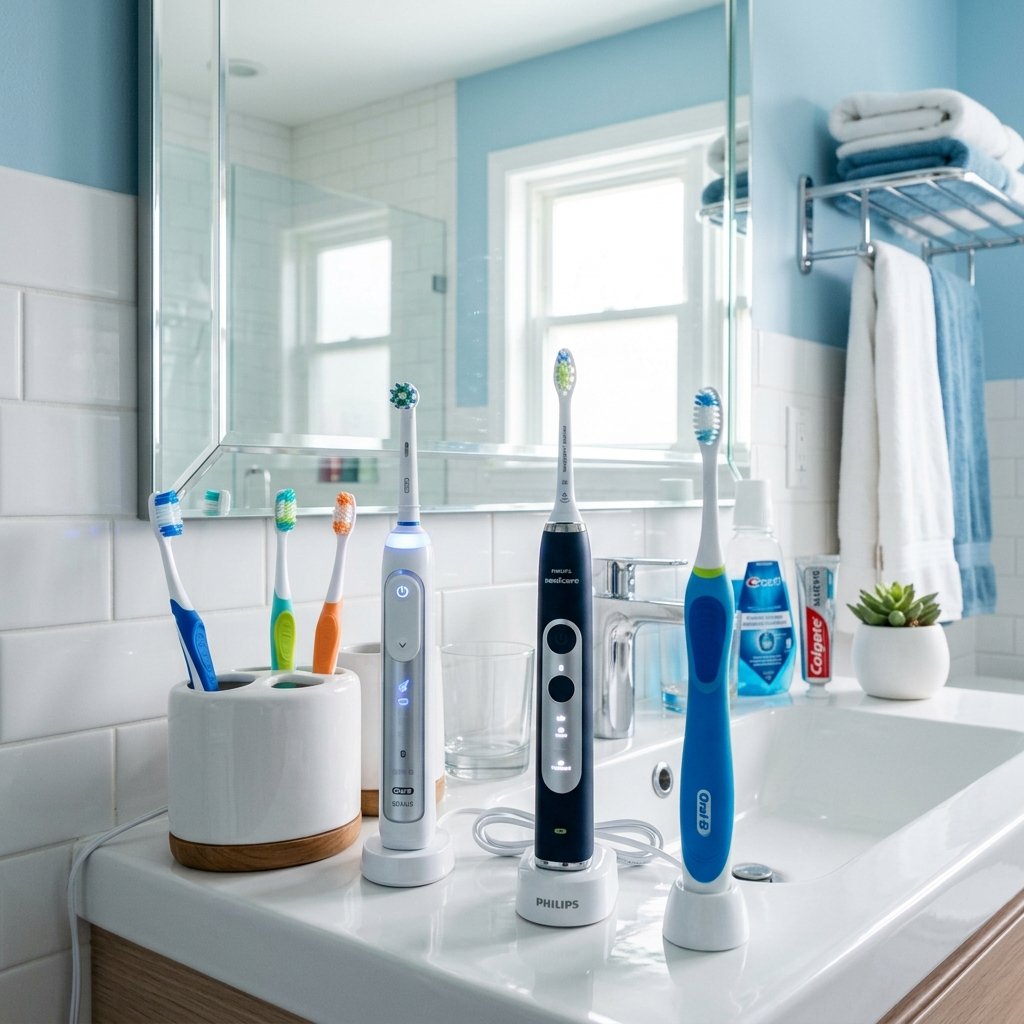

The best toothbrush depends on your specific needs, budget, and oral health goals. Dentists almost universally recommend soft-bristled brushes, and electric toothbrushes—particularly oscillating-rotating models like the Oral-B ion Series—remove significantly more plaque than manual alternatives. For tight budgets, a high-quality manual brush like the Curare CS 5460 is a strong choice.
Most people spend about 48 seconds brushing their teeth—less than half the dentist-recommended two minutes. And while brushing duration matters, the tool you’re brushing with matters just as much. The wrong toothbrush can cause gum recession, enamel abrasion, and missed plaque in the spots that matter most.
The global toothbrush market is a crowded one. Walk into any pharmacy and you’ll face dozens of options: oscillating, sonic, ultrasonic, charcoal-bristled, bamboo-handled, app-connected. The choice feels overwhelming, but the science behind what makes a great toothbrush is clearer than the marketing suggests.
This guide cuts through the noise. Whether you’re looking for the best overall electric toothbrush, a budget-friendly pick, or something designed for sensitive gums or braces, you’ll find a clear, well-researched recommendation here—along with everything you need to know to make an informed choice.
Manual vs. Electric: Which Type of Toothbrush Is Actually Better?
The manual vs. electric debate has been settled, at least in clinical terms. A 2019 Cochrane Review—one of the most comprehensive analyses of its kind—found that electric toothbrushes reduced plaque by 21% and gingivitis by 11% more than manual brushes after three months of use. Over 11 weeks or longer, the difference became even more pronounced.
That said, a manual toothbrush used correctly is still highly effective. The gap in performance largely comes down to technique—something electric brushes help compensate for automatically.
What Are the Pros and Cons of Manual Toothbrushes?
Manual toothbrushes are affordable (often under $5), universally available, and require no charging or batteries. They give users complete control over speed and pressure, and they travel easily without the worry of dead batteries or bulky cases.
The downside: their effectiveness depends heavily on technique. Brushing too hard, using the wrong angle, or missing back molars are common mistakes that manual brush users make without realizing it. They also lack built-in timers and pressure sensors, which means most people under-brush without knowing.
Key features to look for in a manual toothbrush:
- Bristle hardness: Soft bristles, always (more on this below)
- Head size: Smaller heads improve maneuverability around molars
- Handle grip: Non-slip rubber grips reduce fatigue and improve control
What Are the Pros and Cons of Electric Toothbrushes?
Electric toothbrushes do the heavy lifting for you. Built-in timers ensure you brush for the full two minutes, pressure sensors alert you when you’re brushing too hard, and multiple cleaning modes let you customize the experience for sensitivity, whitening, or gum care.
The primary drawbacks are cost and convenience. Quality electric toothbrushes start around $30 and can exceed $200 for premium models, and replacement brush heads add ongoing costs of $5–$15 per head. They also require regular charging.
Three main types of electric toothbrushes:
- Sonic: High-frequency vibrations (up to 62,000 brush strokes per minute) that create fluid dynamics, helping clean between teeth and along the gumline
- Oscillating-rotating: The brush head rotates back and forth in a cupping motion, sweeping plaque off each tooth individually—this is the type used in most Oral-B models
- Ultrasonic: Vibrations beyond the range of human hearing that disrupt bacterial cell membranes; less common but effective for reducing biofilm
What Factors Should You Consider When Choosing the Best Toothbrush?
Why Do Dentists Almost Always Recommend Soft Bristles?
Hard and medium bristles feel more thorough, but they’re associated with two significant long-term risks: gum recession and enamel abrasion. Once gum tissue recedes, it doesn’t grow back. Once enamel wears away, it’s gone permanently. Soft bristles, applied with proper technique, clean just as effectively without the damage. The American Dental Association (ADA) recommends soft-bristled toothbrushes for this reason.
Does Toothbrush Head Size and Shape Matter?
A smaller head offers better access to hard-to-reach areas—particularly the back molars and the spaces along the inner sides of lower front teeth. Most adults find that a head covering one to two teeth at a time works best. Some brands offer angled or contoured heads designed to follow the natural curve of the jaw, which can help with thorough cleaning without awkward wrist positioning.
How Much Should You Spend on a Toothbrush?
Manual brushes range from $2 to $12. Budget electric toothbrushes start around $25–$40 and offer most of the core features (timer, pressure sensor) without app connectivity or premium modes. High-end models like the Oral-B iO Series 9 retail for $150–$250 but offer AI-powered brushing feedback, multiple intensity levels, and premium design.
Factor in replacement heads when considering long-term costs. For heavy users, electric heads replaced every three months can add $40–$60 per year.
Top Toothbrush Picks for Every Type of User
Best Overall Electric Toothbrush: Oral-B iO Series 9
The Oral-B iO Series 9 consistently tops professional reviews and dental recommendations. Oral-B’s oscillating-rotating technology is among the most clinically validated on the market, and the iO Series adds AI-powered brushing guidance through a smartphone app that maps which areas of your mouth need more attention.
- Key features: AI brushing coach, magnetic charging, 7 cleaning modes, pressure sensor with LED display, round oscillating head
- Pros: Exceptional plaque removal, gentle on gums, highly intuitive feedback
- Cons: Premium price ($180–$250), replacement heads cost around $10 each
- Best for: Adults who want a thorough clean with smart guidance and don’t mind the investment
Best Budget-Friendly Electric Toothbrush: Philips Sonicare Protective Clean 4100
The Philips Sonicare Protective Clean 4100 offers sonic cleaning technology, a built-in two-minute timer with 30-second quadrant reminders, and a pressure sensor—all for around $35–$50. It’s ADA-accepted and a strong performer at its price point.
- Key features: Sonic vibration, Brush Sync technology (alerts when to replace heads), pressure sensor, one cleaning mode
- Pros: Affordable, reliable, easy to use, long battery life (up to 2 weeks)
- Cons: Only one mode, no app connectivity, fewer intensity options
- Best for: First-time electric toothbrush users or those switching from manual on a budget
Best Manual Toothbrush: Curaprox CS 5460
The Curaprox CS 5460 is a standout in the manual category. It features 5,460 ultra-fine CUREN fibers—significantly more than the 500–1,000 nylon bristles found in most standard manual brushes—which makes it exceptionally gentle while covering more surface area with each stroke.
- Key features: 5,460 ultra-fine filaments, small head size, ergonomic handle
- Pros: Exceptionally gentle, superior coverage, durable (lasts longer than standard brushes), available in multiple colors
- Cons: Costs more than typical manual brushes ($8–$12), requires deliberate technique
- Best for: Manual brush loyalists who want clinical-grade performance without switching to electric
Best Toothbrush for Sensitive Gums: Philips Sonicare Diamond Clean Smart
The Philips Sonicare Diamond Clean Smart includes a dedicated “Sensitive” mode that reduces brush intensity while maintaining effective cleaning. Its brush head options include the “Sensitive” head with extra-soft bristles designed specifically for gum-reactive users.
- Key features: 5 cleaning modes (including Sensitive and Gum Health), pressure sensor, app connectivity, premium design
- Pros: Highly adaptable to sensitive gum needs, gentle enough for post-dental procedure use, premium build quality
- Cons: Higher price point ($150–$200), replacement heads can be costly
- Best for: People with gum disease, gum recession, or post-surgical sensitivity
Best Toothbrush for Braces: Oral-B Pro 1000 with Ortho Head
Cleaning around brackets and wires requires specialized tools. The Oral-B Pro 1000 paired with an Orthodontic replacement head (featuring a V-shaped bristle trim) is designed to clean around brackets effectively. For manual users, orthodontic V-trim brushes—with a central channel that straddles the wire—are a practical and affordable option.
- Key features (electric): Oscillating-rotating head, pressure sensor, timer, Ortho-compatible head availability
- Pros: Efficient bracket cleaning, prevents plaque buildup around hardware, clinically backed technology
- Cons: Requires purchasing ortho-specific heads separately
- Best for: Anyone currently in orthodontic treatment seeking thorough cleaning around brackets and wires
Best Toothbrush for Travel: Oral-B ion Series 3 (Travel Edition)
The Oral-B ion Series 3 is compact, comes with a travel case, and delivers solid oscillating-rotating performance without the premium price of higher ion models. For travel-focused users who prefer manual, the Curatrix CS 5460 fits neatly into most toiletry bags and needs no charging.
- Key features: Magnetic charging, compact travel case included, pressure sensor, 3 cleaning modes
- Pros: Lightweight, travel-ready design, good performance for the price (~$80), USB charger compatible
- Cons: Fewer features than higher iO models, shorter battery life than some competitors
- Best for: Frequent travelers who don’t want to compromise on oral care while away from home
Beyond the Brush: Complementary Oral Care Practices That Matter
A great toothbrush is only one piece of oral health. Flossing removes plaque and food debris from between teeth—spaces where no toothbrush, manual or electric, can reach. The ADA recommends flossing at least once per day. If traditional floss is difficult to use, water flossers like the Waterpark Aquarius are an effective alternative, particularly for people with braces or dental implants.
Mouthwash, particularly fluoride or antibacterial rinses, adds another layer of protection against cavities and gum disease. And replacing your toothbrush—or brush head—every three months (or sooner if bristles fray) ensures you’re always brushing with an effective tool.
The Bottom Line: Finding the Right Toothbrush for Your Oral Health
The best toothbrush is the one that matches your oral health needs, fits your budget, and one you’ll actually use twice a day for two minutes. For most adults, a quality electric toothbrush with soft bristles and a built-in timer offers a meaningful upgrade over manual brushing. The Oral-B ion Series 9 leads on features and clinical backing; the Philips Sonicare Protective Clean 4100 delivers impressive results at a fraction of the cost.
If you prefer manual, the Curatrix CS 5460 outperforms most competitors in its category. Whatever you choose, pair it with regular flossing, consistent brushing habits, and biannual dental checkups—and your teeth will thank you for years to come.
Frequently Asked Questions About Choosing the Best Toothbrush
What is the best toothbrush recommended by dentists?
Most dentists recommend a soft-bristled toothbrush with a small head. For electric toothbrushes, the Oral-B ion Series and Philips Sonicare lines are among the most frequently recommended due to their clinical backing and built-in timers and pressure sensors.
Are electric toothbrushes better than manual toothbrushes?
According to a 2019 Cochrane Review, electric toothbrushes reduce plaque by 21% and gingivitis by 11% more than manual brushes over three months. Electric toothbrushes are generally more effective, but a well-used manual brush with soft bristles is still a solid option.
How often should you replace your toothbrush or brush head?
The ADA recommends replacing your toothbrush or electric brush head every three to four months, or sooner if the bristles are visibly frayed. Worn bristles are significantly less effective at removing plaque.
What toothbrush is best for people with sensitive gums?
The Philips Sonicare Diamond Clean Smart with its Sensitive mode and soft brush head is widely recommended for sensitive gums. Among manual options, the Curare CS 5460’s ultra-fine filaments are exceptionally gentle while still cleaning effectively.
Is a sonic toothbrush better than an oscillating-rotating toothbrush?
Both are effective. Oscillating-rotating toothbrushes (used in Oral-B models) have strong clinical evidence behind them for plaque removal. Sonic toothbrushes (used in Philips Sonicare models) work well for users who prefer a gentler brushing sensation. The best choice depends on personal preference and comfort.
What is the best toothbrush for people with braces?
The Oral-B Pro 1000 with an Orthodontic brush head is a top electric option for braces wearers. For manual users, V-trim orthodontic toothbrushes—designed to straddle the wire—are an effective and affordable choice.