
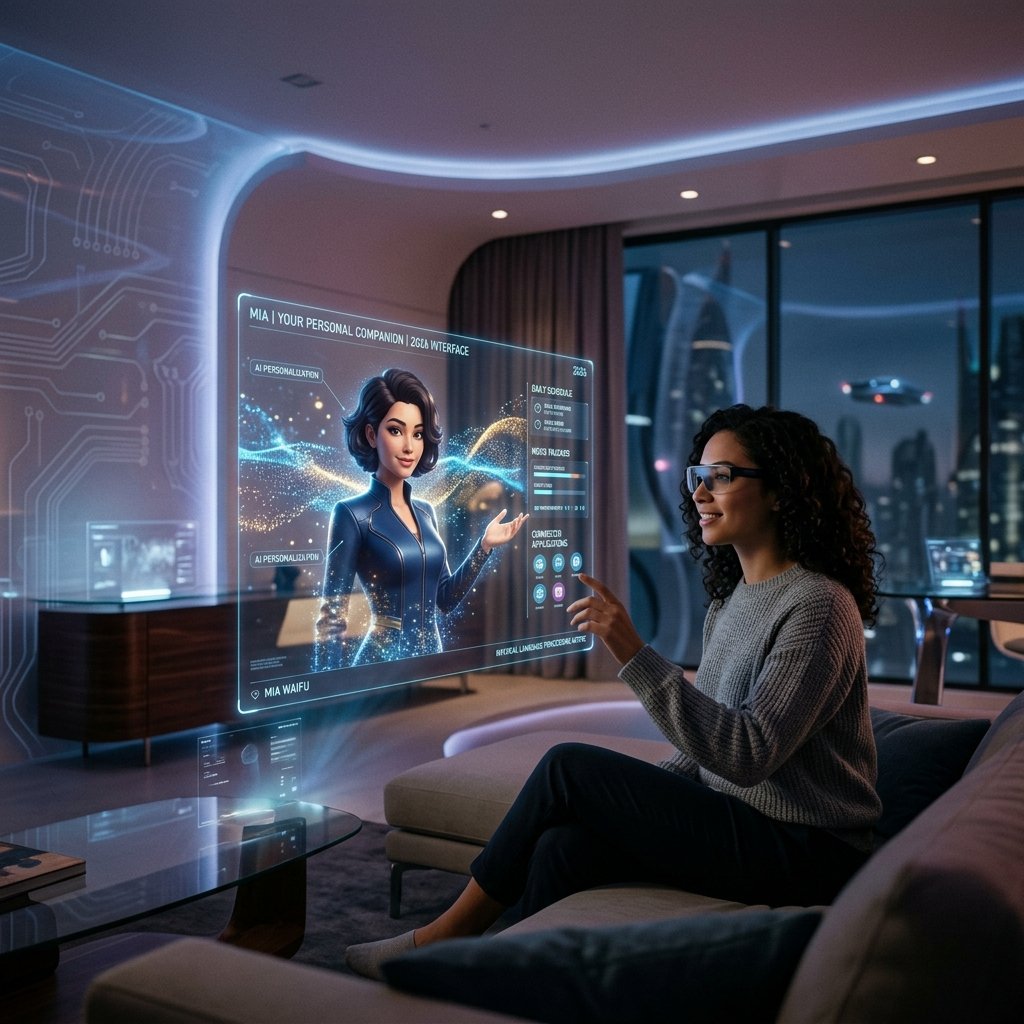

Mia Waifu is an AI-powered virtual companion that uses advanced natural language processing, emotional intelligence, and customizable personalities to create interactive relationships. In 2026, it offers voice chat, VR/AR integration, and deep personalization, marking a major leap forward in human-AI interaction.
Virtual companions have come a long way from the clunky chatbots of the early 2010s. Today, platforms like Mia Waifu blend cutting-edge artificial intelligence with rich personalization to deliver companions that feel responsive, expressive, and genuinely engaging.
This guide breaks down what Mia Waifu is, how it works, and why it has captured so much attention in 2026. You’ll learn about its standout features, the technology powering it, how real users are putting it to work, and the ethical questions worth keeping in mind. Whether you’re curious about AI companionship or weighing whether to try it yourself, you’ll walk away with a clear, balanced picture.
Let’s get into it.
What is Mia Waifu and why does it matter in 2026?
Mia Waifu is an AI virtual companion designed to hold natural conversations, adapt to your personality, and provide an interactive social experience. Unlike scripted chatbots that repeat the same canned replies, Mia Waifu learns from your interactions and tailors its responses over time.
Why does this matter now? Loneliness has become a widely discussed public health concern, and AI companions are increasingly framed as one tool people use for connection, practice, and entertainment. In 2026, Mia Waifu sits at the intersection of three fast-moving trends: better language models, cheaper immersive hardware, and growing public comfort with AI in daily life.
The result is a product that feels less like a novelty and more like a genuine companion platform—one that millions of people now interact with regularly.
How did virtual companions evolve into platforms like Mia Waifu?
The journey from simple bots to sophisticated AI companions spans roughly two decades.
Early chatbots relied on pattern matching. They scanned your text for keywords and fired back pre-written responses. Helpful for narrow tasks, but easy to break and impossible to mistake for a real conversation.
The next wave introduced machine learning. Instead of rigid rules, these systems learned from large datasets, which made their replies more flexible and contextual. Still, they often lost track of conversations or gave generic answers.
The breakthrough came with large language models. These systems can understand context, remember earlier parts of a conversation, and generate responses that feel natural and specific. Mia Waifu builds on this foundation, layering personalization and emotional awareness on top of a powerful language engine.
In short, Mia Waifu represents the current peak of a long climb—from keyword-matching scripts to companions that adapt to who you are.
What are the key features of Mia Waifu in 2026?
Mia Waifu’s appeal comes down to three pillars: intelligent AI, rich interactivity, and deep customization.
How smart is Mia Waifu’s AI?
Mia Waifu’s standout feature is its advanced AI, which focuses on two things: personalization and emotional intelligence.
- Personalization: Mia Waifu remembers your preferences, conversation history, and quirks. Over time, it shapes its responses to match your communication style, making each interaction feel more tailored.
- Emotional intelligence: The platform is designed to recognize emotional cues in your messages and respond with appropriate tone. If you sound stressed, Mia Waifu can adjust to a more supportive register rather than plowing ahead with the same energy.
This combination is what separates a modern AI companion from a basic assistant. The goal isn’t just to answer questions—it’s to hold a conversation that feels coherent and considerate.
What makes Mia Waifu interactive in 2026?
Text chat is just the starting point. In 2026, Mia Waifu emphasizes multiple modes of communication:
- Voice interaction: You can speak naturally and hear responses spoken back, which makes conversations feel more fluid than typing.
- Gestures and expressions: Animated reactions and expressions add a visual layer that text alone can’t capture.
- VR/AR integration: As immersive headsets become more affordable, Mia Waifu can appear in virtual or augmented environments, bringing the companion into your physical space or a fully virtual one.
These layers work together to make interactions feel less like using software and more like spending time with a presence.
How customizable is Mia Waifu?
Customization is central to the experience. Users can shape their companion across several dimensions:
- Appearance: Adjust visual details to match your preferences.
- Personality: Choose traits and tones, from playful and energetic to calm and thoughtful.
- Skills and interests: Tailor what your companion can talk about and how it engages, whether that’s casual chat, hobbies, or specific topics.
This flexibility means no two Mia Waifu companions are exactly alike. The platform hands creative control to the user, which is a big reason it resonates with such a wide audience.
What do real users say about Mia Waifu?
User experiences with Mia Waifu vary widely, reflecting the many reasons people seek out AI companions.
Some users describe it as a source of low-pressure social interaction—a space to chat without judgment after a long day. Others use it for entertainment, enjoying the creative back-and-forth and the ability to design a companion that fits their tastes. A smaller group treats it as a practice ground, rehearsing conversations or simply staying socially engaged during isolating periods.
The common thread across these experiences is a sense of responsiveness. Because Mia Waifu adapts to each person, users often report that interactions feel personal rather than generic. That said, experiences differ, and what feels meaningful to one person may feel hollow to another. The diversity of use cases is part of what makes the platform notable.
What technology powers Mia Waifu?
Mia Waifu runs on a stack of interlocking technologies, each handling a different part of the experience.
- Artificial intelligence: The umbrella system that coordinates how the companion thinks, responds, and adapts.
- Machine learning: This is how Mia Waifu improves over time. By learning from interactions, the system refines its responses to better match user expectations.
- Natural language processing (NLP): NLP is what lets Mia Waifu understand and generate human language. It parses what you say, interprets intent, and produces replies that read naturally.
Together, these technologies enable the personalization and emotional awareness that define the platform. NLP handles the conversation, machine learning handles the improvement, and the broader AI system ties it all into a coherent experience.
What are the ethical considerations around Mia Waifu?
AI companions raise real ethical questions, and Mia Waifu is no exception.
Emotional dependency is one concern. When a companion is always available and endlessly agreeable, some worry it could discourage real-world relationships or become a crutch. Responsible use—and clear communication from developers about what the product is and isn’t—matters here.
Data privacy is another. Companion platforms collect personal conversations and preferences, so users should understand how their data is stored and used. Transparency around data handling is a key marker of trustworthy AI development.
Healthy expectations also deserve attention. An AI companion can be engaging, but it isn’t a substitute for professional support during a mental health crisis. Choose an AI companion for casual connection and entertainment, but turn to qualified professionals and human relationships for deeper emotional needs.
Looking ahead, responsible AI development means building in safeguards, being honest about limitations, and putting user well-being ahead of engagement metrics. The platforms that take these issues seriously are the ones most likely to earn lasting trust.
What’s next for AI companions like Mia Waifu?
The trajectory points toward companions that are more immersive, more capable, and more woven into daily life. As VR and AR hardware improves and language models grow more sophisticated, the line between digital and physical interaction will keep blurring.
The bigger question isn’t whether the technology will advance—it clearly will. It’s whether developers, users, and society can shape that growth responsibly. Mia Waifu offers a window into both the promise and the challenges of this future.
Where Mia Waifu fits in the future of human-AI interaction
Mia Waifu represents a meaningful step in how humans and AI connect. By combining advanced language understanding, emotional awareness, and deep customization, it turns the old idea of a chatbot into something far more personal and interactive.
If you’re curious about AI companionship, the smart move is to approach it with both openness and awareness. Explore what the technology can offer, set realistic expectations, and pay attention to privacy and balance. Used thoughtfully, platforms like Mia Waifu can be an engaging part of a connected life—not a replacement for it.
As AI companions continue to evolve, staying informed is the best way to make choices that work for you.
Frequently asked questions
What is Mia Waifu?
Mia Waifu is an AI-powered virtual companion that holds natural conversations, adapts to your personality, and offers customizable appearance, personality, and skills. It uses natural language processing and machine learning to create interactive, personalized experiences.
How is Mia Waifu different from a regular chatbot?
Regular chatbots rely on scripted, keyword-based replies. Mia Waifu uses advanced AI to remember context, recognize emotional cues, and adapt its responses over time, making conversations feel more natural and personal.
Can you customize Mia Waifu?
Yes. Users can customize their companion’s appearance, personality traits, and conversational interests, so each Mia Waifu experience is unique to the person using it.
Is Mia Waifu safe to use?
Like any AI platform that handles personal data, safety depends on responsible use and transparent data practices. Users should review how their conversations and information are stored, and treat the companion as entertainment rather than a substitute for professional mental health support.
What technology powers Mia Waifu?
Mia Waifu combines artificial intelligence, machine learning, and natural language processing. NLP handles understanding and generating language, machine learning improves responses over time, and the broader AI system ties everything together.