
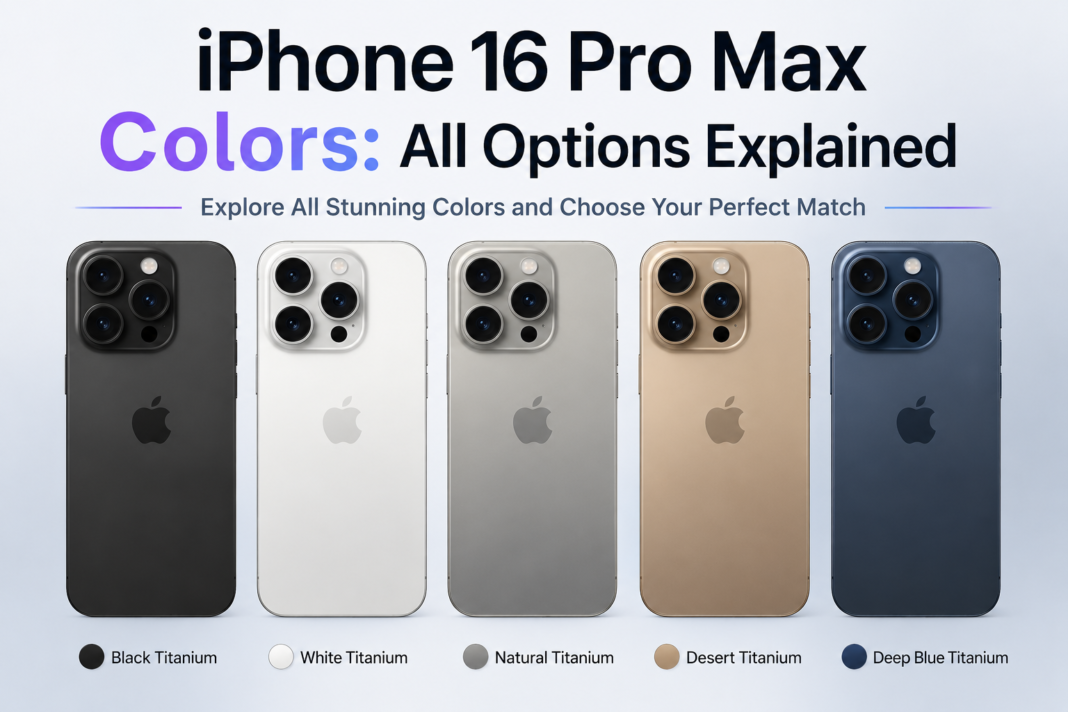

iphone 16 pro max colors is available in four titanium finishes: Black Titanium, White Titanium, Natural Titanium, and Desert Titanium. Apple moved away from bold hues in 2024, opting instead for understated, premium tones that complement the phone’s titanium frame and reflect a broader shift toward refined, sophisticated design.
Apple’s annual color reveal is one of tech’s most anticipated moments—and the iPhone 16 Pro Max didn’t disappoint. With a refined palette of four titanium finishes, Apple made a deliberate departure from the electric blues and deep purples of recent years. The result is a lineup that feels more mature, more premium, and more considered than ever before.
But choosing the right color is harder than it looks. Each finish tells a different story, suits a different personality, and holds up differently over time. The wrong choice and you’re stuck with a color that grates on you for the next two years. The right one and your phone feels like an extension of who you are.
This guide breaks down every iPhone 16 Pro Max color option in detail—what each finish looks like in real life, who it’s designed for, and how it stacks up against Apple’s previous flagships. You’ll also find practical advice on how to factor in cases, accessories, and resale value before you commit.
What Are the iPhone 16 Pro Max Color Options?
Apple launched the iPhone 16 Pro Max with four color options, all built around its Grade 5 titanium frame:
- Black Titanium
- White Titanium
- Natural Titanium
- Desert Titanium
Each finish pairs the titanium band with a textured matte back glass, giving the device a consistent, unified aesthetic. Gone are the shiny stainless steel edges of the iPhone 14 Pro era. The titanium construction introduced with iPhone 15 Pro has been refined further, resulting in a lighter, more durable, and visually cohesive device.
A Deep Dive Into Each iPhone 16 Pro Max Color
Black Titanium: The Modern Take on Space Black
Black has been a flagship staple since the original iPhone. The iPhone 16 Pro Max’s Black Titanium finish is the most polished evolution of that legacy yet.
Rather than the jet-black gloss of earlier models or the deep charcoal of Space Gray, Black Titanium delivers a cool, dark tone with a subtle metallic sheen. The matte back glass minimizes fingerprints—a frequent complaint with darker finishes in previous generations—while the titanium band adds a refined edge that catches light just enough to feel premium without being flashy.
Black Titanium suits those who want a phone that commands attention through restraint. It’s authoritative, versatile, and pairs cleanly with almost any case color. Historically, dark iPhone variants have also held strong resale value, making this a smart long-term pick.
White Titanium: A Cleaner, More Contemporary Starlight
White and silver iPhones have existed in one form or another since 2013’s iPhone 5s. The iPhone 16 Pro Max’s White Titanium finish represents the cleanest, most modern iteration of that lineage.
Where Starlight (introduced with iPhone 13) carried a warm, champagne-like undertone, White Titanium reads as a cooler, crisper white. The matte back glass gives it a soft, almost ceramic quality that feels distinctly high-end. In natural light, the titanium band picks up a slightly silvery tone that contrasts beautifully with the back panel.
This is the finish for minimalists. Clean desk setups, neutral wardrobes, architectural interiors—White Titanium fits seamlessly into an aesthetic built around simplicity. It’s worth noting, however, that light-colored iPhones tend to show scuffs on the titanium band more readily than darker variants, particularly if used without a case.
Natural Titanium: Understated Luxury
Natural Titanium is arguably the most distinctive finish in the iPhone 16 Pro Max lineup—and the one most clearly designed to show off the material itself.
The finish exposes the raw, brushed quality of the titanium alloy, resulting in a warm, medium-toned gray with subtle brown undertones. It doesn’t photograph dramatically, but in person it has a quiet confidence that more saturated colors can’t replicate. Natural Titanium is the finish that says the phone doesn’t need to try hard.
This option appeals strongly to professionals and design-conscious buyers who appreciate craftsmanship over color. It’s also among the most forgiving finishes for everyday use—minor scuffs tend to blend into the brushed texture rather than standing out. If you’ve ever admired the look of raw industrial materials—brushed steel, unfinished concrete, natural leather—Natural Titanium will resonate.
Desert Titanium: The Boldest Choice of the Four
Desert Titanium is the closest Apple came to a statement color with the iPhone 16 Pro Max. A warm, golden-beige tone, it draws clear lineage from Apple’s Gold and Starlight offerings while pushing in a slightly earthier direction.
The finish is nuanced—not quite gold, not quite beige, but something in between that shifts depending on the lighting. Under warm indoor light, Desert Titanium leans golden. Outdoors in natural daylight, it reads closer to sand. That chameleon quality is part of its appeal.
Historically, Apple’s gold and warm-toned iPhone variants have attracted strong demand, particularly in markets across Asia and the Middle East where gold colorways carry cultural and social significance. Desert Titanium continues that tradition while feeling more contemporary and gender-neutral than the glossier gold finishes of the iPhone X era.
What Drives Apple’s iPhone Color Decisions?
How market trends and consumer preferences shape the palette
Apple doesn’t choose colors arbitrarily. Each palette reflects extensive market research, sales data from previous cycles, and broader cultural trend forecasting. The shift from bold, saturated hues (Sierra Blue in iPhone 13 Pro, Deep Purple in iPhone 14 Pro) toward the understated titanium finishes of the iPhone 15 and 16 Pro lineups signals a deliberate repositioning.
As smartphone designs have matured and screen sizes have grown, Apple appears to be letting the hardware itself—the titanium construction, the ceramic shield glass, the precision engineering—become the visual statement. Color becomes texture rather than hue.
How manufacturing processes influence available finishes
The move to Grade 5 titanium with iPhone 15 Pro introduced new manufacturing constraints—and new creative possibilities. Titanium is significantly harder to anodize than aluminum, which limits the vibrancy of achievable colors. Apple’s solution has been to develop PVD (Physical Vapor Deposition) coating techniques that bond color to the titanium surface at a molecular level, resulting in finishes that are more durable and more consistent than traditional anodization.
This is why the iPhone 16 Pro Max colors feel more refined than the aluminum-framed models in the standard iPhone 16 lineup. The process is more complex, more expensive, and produces a more premium result.
How Apple uses color as a branding and marketing tool
Color is one of Apple’s most powerful marketing levers. Each new iPhone generation introduces at least one novel finish specifically designed to generate conversation, drive upgrade motivation, and distinguish the new model visually from its predecessor. Desert Titanium serves that function for the iPhone 16 Pro Max—it’s the color people talk about, the one that gets highlighted in launch videos, the one that drives curiosity in-store.
Does iPhone 16 Pro Max Color Affect Resale Value?
The short answer: yes, but not dramatically.
Neutral finishes—Black Titanium and Natural Titanium—tend to maintain the broadest buyer appeal on the secondary market, which supports slightly stronger resale prices. Statement colors like Desert Titanium can cut both ways: strong initial demand among buyers who love the finish, but a narrower pool of interested buyers when resale time comes.
For buyers focused on maximizing resale value, Black Titanium or Natural Titanium are the safer bets. For buyers who prioritize personal expression and plan to keep their device long-term, that calculus changes entirely.
How to Choose the Best iPhone 16 Pro Max Color for You
Should you factor in cases and accessories when choosing a color?
Statistically, most iPhone buyers use a case—which raises a fair question: does color even matter if the back is covered?
It does, for a few reasons. The titanium band remains visible regardless of case choice and contributes significantly to the overall look of the device. Clear and ultra-thin cases also let the finish show through, so the underlying color still shapes the aesthetic. And there are moments—swapping cases, setting the phone down at a meeting, handing it to someone else—where the base finish is fully on display.
Choose a base color that works both with and without your preferred case. Desert Titanium, for example, pairs beautifully with warm earth-tone cases but can clash with cooler grays and blues.
How does color choice relate to personal style and long-term satisfaction?
The best color for you is the one you’ll still love in 18 months. Trend-driven choices can feel exciting at purchase but dated quickly. The iPhone 16 Pro Max’s titanium palette is notably trend-resistant—all four finishes are grounded in neutral, enduring tones rather than seasonal colors.
A useful exercise: look at the colors you gravitate toward in your wardrobe, your home, and your accessories. If you consistently reach for black, Black Titanium is an obvious fit. If your aesthetic runs warm and earthy, Desert Titanium will feel cohesive. Natural Titanium suits buyers who prefer quiet, understated quality. White Titanium is for those who gravitate toward clean, minimal aesthetics.
Frequently Asked Questions About iPhone 16 Pro Max Colors
How many color options does the iPhone 16 Pro Max come in?
The iPhone 16 Pro Max is available in four colors: Black Titanium, White Titanium, Natural Titanium, and Desert Titanium. All four feature a Grade 5 titanium frame with a matte back glass finish.
What is the most popular iPhone 16 Pro Max color?
Based on general sales trends for Pro iPhone models, Black Titanium and Natural Titanium typically generate the highest consistent demand. Desert Titanium attracted strong initial interest at launch due to its novelty. Popularity varies by region—warm-toned finishes like Desert Titanium tend to perform particularly well in Asian and Middle Eastern markets.
Does the iPhone 16 Pro Max come in gold?
The iPhone 16 Pro Max does not have a dedicated “Gold” option. Desert Titanium is the closest equivalent—a warm, golden-beige finish that echoes Apple’s previous gold variants while feeling more contemporary.
Which iPhone 16 Pro Max color is best for resale value?
Neutral finishes like Black Titanium and Natural Titanium generally hold the broadest resale appeal due to their universal aesthetic. These tend to perform slightly better on secondary markets compared to more distinctive finishes.
Is there a Space Gray iPhone 16 Pro Max?
Space Gray was retired from the Pro lineup when Apple transitioned to titanium frames. Black Titanium is its closest successor—darker and more refined, with a matte finish that addresses the fingerprint issues associated with earlier Space Gray models.
What color iPhone 16 Pro Max should I buy?
Choose Black Titanium for versatility and resale strength. Choose White Titanium for a minimal, clean aesthetic. Choose Natural Titanium if you appreciate understated craftsmanship and warm neutrals. Choose Desert Titanium if you want a distinctive finish that leans warm and contemporary. All four are excellent options—the right choice depends on your personal style and how you plan to use the device.
The Palette That Defines a Generation
The iPhone 16 Pro Max’s four titanium finishes represent Apple’s most considered color strategy in years. By anchoring the palette in premium, material-forward neutrals rather than trend-chasing saturated hues, Apple has created a lineup where every option feels deliberate and every finish has a clear identity.
Black Titanium owns versatility. White Titanium owns minimalism. Natural Titanium owns craftsmanship. Desert Titanium owns warmth. Together, they cover most of the aesthetic spectrum without a weak entry in the group.
The practical next step: if you can, see them in person before deciding. Apple Store lighting is designed to showcase the finishes, but natural daylight reveals nuances—particularly with Natural Titanium and Desert Titanium—that photos and screens can’t fully capture.
Which iPhone 16 Pro Max color is on your shortlist? Drop your pick in the comments below—we’d love to hear what’s drawing you to it.